Programme Overview
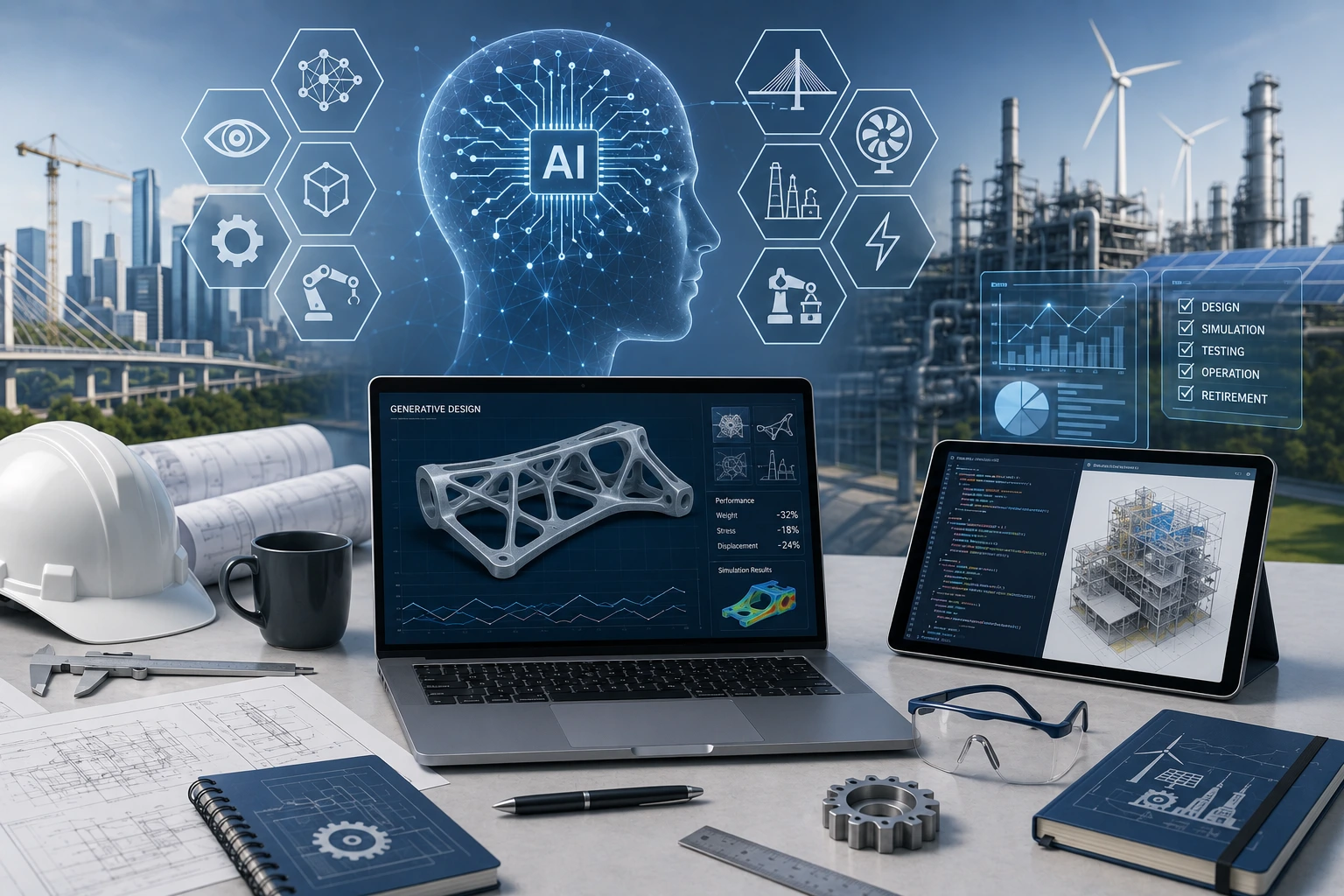
An intensive two-day programme for practising engineers across disciplines that translates AI capability into engineering practice. It covers how machine learning, computer vision, generative design, physics-informed AI and agentic AI are reshaping engineering workflows, and how to integrate AI into design, simulation, testing and operations without compromising engineering rigour. Every module includes hands-on work using tools and data that engineers deal with daily. The programme suits civil, mechanical, electrical, chemical, industrial and software engineering contexts, with discipline-specific tracks during the practical sessions.
Learning Objectives
By the end of this programme, participants will be able to:
- Describe the categories of AI most relevant to their engineering discipline and identify when each applies.
- Use generative-AI tools for design exploration, technical documentation, code generation for engineering calculations, and engineering communication.
- Critically interpret AI-generated engineering output, including uncertainty, failure modes and verification requirements.
- Integrate AI assistants into engineering workflows spanning CAD, BIM, simulation, PLM and MES environments.
- Evaluate engineering AI vendors and tools for technical fit, interoperability and risk.
- Apply responsible-AI principles in engineering practice, including verification, validation, liability and safety.
Programme Content & Modules
Day 1: The AI landscape and engineering tools
An overview of AI across the engineering domain. Supervised, unsupervised and reinforcement learning in engineering contexts. Generative design. Physics-informed neural networks. Computer vision for inspection and monitoring. Digital twins. Where AI integrates across the engineering life cycle from concept through operation to decommissioning. Case studies from Saudi giga-projects, industrial facilities and public utilities.
Practical work with generative AI for engineering documentation, technical-specification writing and code generation for engineering calculations. Prompt engineering for technical accuracy. A tour of AI-enhanced CAD, BIM and simulation environments. Discipline-specific groups by engineering branch.
Day 2: AI-supported engineering and responsible practice
Failure analysis, root-cause investigation and design optimisation with AI as an engineering partner. Integration patterns with simulation and CAD/BIM environments. A group exercise on a realistic engineering challenge drawn from Saudi giga-project and industrial-facility contexts.
Verification and validation of AI-generated engineering output. Professional and legal liability when AI enters the loop. Governance of engineering data and intellectual-property considerations. The implications of SDAIA and sector regulation for AI-supported engineering decisions. Data-sovereignty considerations for engineering IP. Applied capstone project: each participant applies a structured method to a challenge from their own discipline.
Suggested Duration
Two training days.
Target Audience & Prerequisites
Target audience: Practising engineers across civil, mechanical, electrical, chemical, industrial and software disciplines, working in engineering consultancies, government bodies, public utilities and the energy, construction, manufacturing, transport and industrial sectors. The programme suits engineers from early-career to senior level and is especially valuable for technical team leads and engineering managers.
Prerequisites: A degree in engineering or an equivalent professional qualification. Basic computer literacy. No prior background in AI or programming is required, though those with programming experience will find additional depth in the practical work. A laptop is required for the hands-on sessions.