Course Overview
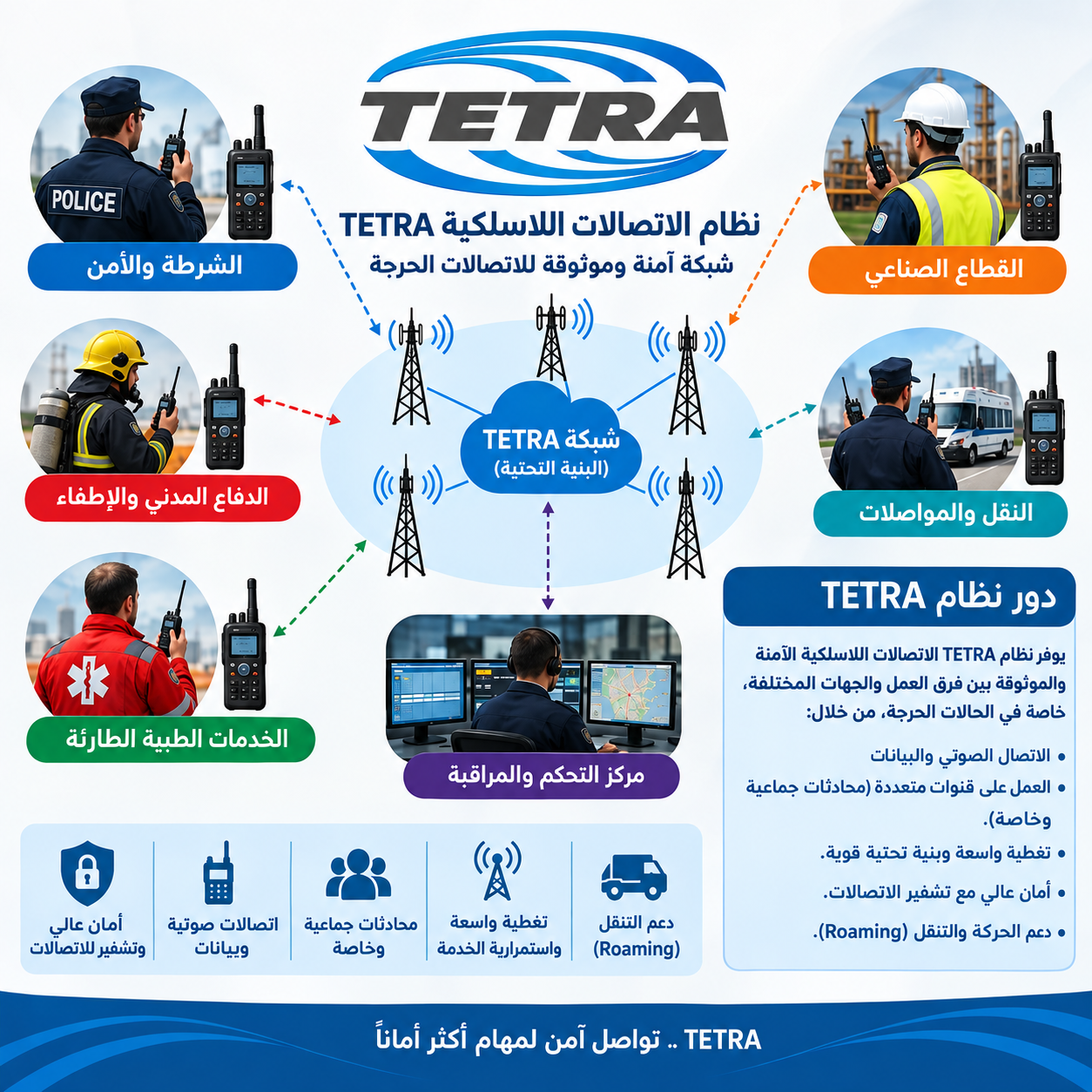
A comprehensive practical course designed to provide telecom and radio professionals with the knowledge and skills required to understand, configure, maintain and troubleshoot TETRA radio communication systems. The program covers RF fundamentals, TETRA architecture and standards, network components, radio programming and fleet mapping, preventive and corrective maintenance, and RF interference detection and troubleshooting.
Participants will gain a practical understanding of TETRA infrastructure, handheld radios, radio IDs, talkgroups, frequencies, programming software, maintenance procedures and RF testing techniques, with practical exercises focused on real-world radio-system operations
Course Objectives
By the end of the course, participants will be able to:
- Understand fundamental RF, UHF/VHF and TETRA concepts.
- Explain TETRA architecture, network components and communication modes.
- Understand TETRA standards, frequency allocation and applicable regulations.
- Understand CITC requirements and carrier-frequency licensing.
- Select appropriate towers, antennas, feeders, cables and RF components.
- Understand TETRA handheld radio operation and network connectivity.
- Configure radio parameters, IDs, talkgroups and communication settings.
- Perform basic TETRA radio programming, fleet mapping, backup and restoration.
- Apply preventive and corrective maintenance procedures.
- Identify and troubleshoot common TETRA radio faults.
- Detect, trace and troubleshoot RF interference using appropriate test equipment.
- Document maintenance, testing and troubleshooting activities professionally.
Training Contents
Module 1 – RF & TETRA Fundamentals
- RF fundamentals, frequency, wavelength and bandwidth
- UHF vs. VHF
- RF power, signal levels, VSWR and return loss
- Antennas, feeders, cables and connectors
- RF propagation and communication fundamentals
- Introduction to RF test equipment
- Introduction to TETRA and terminology
Module 2 – TETRA System Architecture & Infrastructure
- TETRA architecture and network components
- International standards and regulations
- Frequency bands and regional allocations
- TETRA suppliers and manufacturers
- CITC and frequency licensing
- Network Management System
- Towers, antennas and RF cable-system selection
- Radio units and infrastructure
- Frequencies, channels, talkgroups and communication modes
الوحدة الثالثة – برمجة أجهزة TETRA المحمولة وإدارة وتخطيط مجموعة الأجهزة
- أنماط تشغيل أجهزة TETRA.
- تشغيل أجهزة الراديو عبر شبكات TETRA.
- مفاهيم إنهاء/اتصال أجهزة الراديو (Radio Termination).
- معرّفات المشتركين: GSSI وISSI.
- هندسة أجهزة Motorola TETRA.
- برامج البرمجة ومفاهيم التهيئة.
- معرّفات أجهزة الراديو والمعلمات والإعدادات التشغيلية.
- مجموعات الاتصال ومعلمات الاتصال.
- النسخ الاحتياطي للتهيئة والاستعادة.
- استكشاف أعطال البرمجة وإصلاحها.
الوحدة الرابعة – الصيانة الوقائية والتصحيحية
- مفاهيم صيانة أنظمة TETRA.
- إجراءات الصيانة الوقائية.
- الصيانة التصحيحية.
- فحص أجهزة الراديو واختبارها.
- تحديد الأعطال واستكشافها وإصلاحها.
- الأعطال الشائعة في أنظمة TETRA.
- توثيق أعمال الصيانة وإعداد التقارير.
- تمارين عملية على الصيانة.
الوحدة الخامسة – اكتشاف التداخلات الراديوية RF واستكشاف أعطالها
- أساسيات التداخلات الراديوية RF.
- أنواع ومصادر التداخل.
- أعراض التداخل وطرق تحديده.
- أساسيات محلل الطيف (Spectrum Analyzer).
- تقنيات تتبع إشارات RF.
- تحديد موقع التداخل.
- منهجية استكشاف الأعطال وإصلاحها.
- الإجراءات التصحيحية والتحقق من النتائج.
الفئة المستهدفة
- مهندسو وفنيو الاتصالات والترددات الراديوية وأنظمة الراديو العاملون في أنظمة TETRA وأنظمة الاتصالات الراديوية الاحترافية.
- مهندسو التركيب والاختبار والتشغيل والصيانة المسؤولون عن البنية التحتية لأنظمة TETRA وأجهزة الراديو المحمولة وأنظمة RF.
- متخصصو الدعم الفني والعمليات المسؤولون عن برمجة أجهزة الراديو وإدارة مجموعة الأجهزة واستكشاف الأعطال وصيانة شبكات الاتصالات الحرجة